
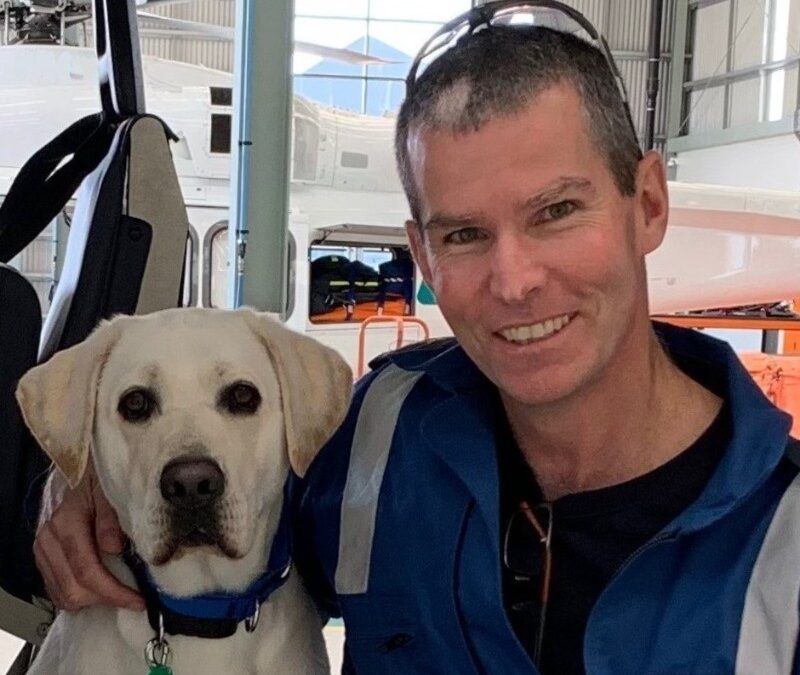
Mark Layson, what happens when the greatest wounds in the workplace are not caused by the job itself — but by the way people are treated within the organisation?
That was the powerful and deeply reflective conversation on the latest episode of The Courage to Lead Interview Series with Reverend Dr Mark Layson — researcher, disaster recovery chaplain, former NSW Police officer, former firefighter, paramedic chaplain, and author of the compelling new book The Unexpected Poison: Betrayal and Moral Injury in Your Workplace.
This episode was not simply about trauma.
It was about betrayal.
It was about trust.
And it was about the hidden emotional injuries that quietly destroy people inside workplaces.
Mark Layson’s life journey is extraordinary. He has served across multiple emergency services, spent years as an Anglican pastor, now leads the NSW and ACT Disaster Recovery Chaplaincy Network, and supervises PhD candidates researching moral injury and organisational culture.
But perhaps most importantly, Mark speaks with honesty.
There is no ego in this conversation.
No “perfect leader” narrative.
Instead, there is humility, reflection, curiosity and courage.
And that is exactly why this episode matters.
Mark Layson – “It’s Not the Trauma — It’s How We’re Treated”
One of the most profound themes in the interview was Mark’s explanation of moral injury.
For decades, organisations focused heavily on trauma exposure. But Mark Layson argues that many people are not breaking because of what they witnessed — they are breaking because of how they were treated afterwards.
That distinction changes everything.
Moral injury occurs when someone’s deeply held beliefs about fairness, loyalty, integrity or humanity are violated.
It can happen through:
- Betrayal by leadership
- Toxic workplace cultures
- Organisational hypocrisy
- Being silenced or unsupported
- Witnessing unethical behaviour
- Feeling abandoned after critical incidents
Mark explained that emergency service workers often cope remarkably well with trauma itself. What damages them most is when the organisation they trusted fails them.
That insight alone makes this episode essential listening for every leader.
Leadership Is Not About Rank — It’s About Service
Throughout the conversation, Mark Layson repeatedly returned to one central belief:
“Leadership is service.”
His stories from policing, ministry and emergency services highlighted leaders who quietly protected people, guided them, and helped them become better versions of themselves.
One particularly powerful moment came when Mark described a senior officer who corrected him privately rather than humiliating him publicly.
That single act of dignity and emotional intelligence stayed with him for more than 30 years.
Why?
Because leadership moments are rarely forgotten.
People remember:
- Who protected them
- Who embarrassed them
- Who listened
- Who ignored dysfunction
- Who showed courage
- Who chose silence
The conversation reinforced a critical truth:
Leadership is not measured during easy moments.
It is measured in difficult conversations.
Mark Layson – The Danger of “Bricks and Doors” Leadership
One of the most memorable concepts in the episode was what Mark Layson described as the “bricks and doors” leadership style.
A leader says:
“My door is always open.”
But follows it with:
“If you do the wrong thing, I’ll come down on you like a ton of bricks.”
Mark challenged the contradiction in that style of leadership.
If people fear punishment, humiliation or retaliation, they will not speak honestly.
And without honesty:
- Organisations stop learning
- Psychological safety disappears
- Mistakes get hidden
- Cultures deteriorate
This section of the conversation was incredibly relevant for modern workplaces.
Too many organisations still say they want feedback — while punishing the people who provide it.
Psychological Safety Saves Organisations
Mark Layson’s discussion around psychological safety and “Just Culture” was one of the strongest leadership lessons of the interview.
He explained that in aviation and aeromedical environments, leaders actively encourage reporting of mistakes and near misses because learning prevents disasters.
The focus becomes:
- What happened?
- Why did it happen?
- What system factors contributed?
- How do we improve?
Not:
- Who do we blame?
That distinction matters enormously.
Because blame cultures create fear.
And fear destroys communication.
Mark’s reflections challenge every leader to ask:
- Do my people feel safe telling me the truth?
- Can mistakes be discussed openly?
- Am I building learning or fear?
Curiosity: The Hidden Leadership Superpower
Another standout theme was curiosity.
Mark Layson described leadership as the willingness to continually ask:
- Why?
- What are we missing?
- What if we looked at this differently?
- What role do I play in this?
That mindset led him into academic research and ultimately to writing his book.
It also led to one of the most fascinating metaphors in the episode.
Mark keeps a globe upside down beside his desk.
Why?
Because there is no true “up” in the universe.
The map only looks the way it does because powerful people drew it that way.
That metaphor perfectly captures Mark’s approach to leadership and research:
Sometimes the breakthrough happens when we deliberately look at things differently.
Mark Layson – The Courage to Examine Ourselves
One of the most admirable aspects of this interview was Mark Layson’s willingness to discuss his own leadership failures.
He openly acknowledged times when:
- He avoided difficult conversations
- He allowed dysfunction to continue
- He hoped problems would fix themselves
And he admitted the consequences were painful.
That level of self-awareness is rare.
But it also revealed one of the episode’s strongest leadership lessons:
Good leaders are not perfect leaders.
Good leaders reflect.
They learn.
They adapt.
They grow.
And they take responsibility for their part.
A Conversation Every Workplace Needs
This episode with Reverend Dr Mark Layson is one of the most important leadership conversations featured on The Courage to Lead Interview Series.
It is thoughtful.
It is intelligent.
It is deeply human.
And in a world where workplace burnout, distrust and psychological harm continue to rise, this conversation could not be more timely.
Mark’s work challenges organisations to move beyond slogans and wellbeing posters.
Instead, he calls for workplaces built on:
- Trust
- Benevolence
- Psychological safety
- Accountability
- Curiosity
- Compassion
- Honest leadership
Because ultimately, people do not just remember what leaders achieved.
They remember how leaders made them feel.
And that may be the true measure of leadership.