
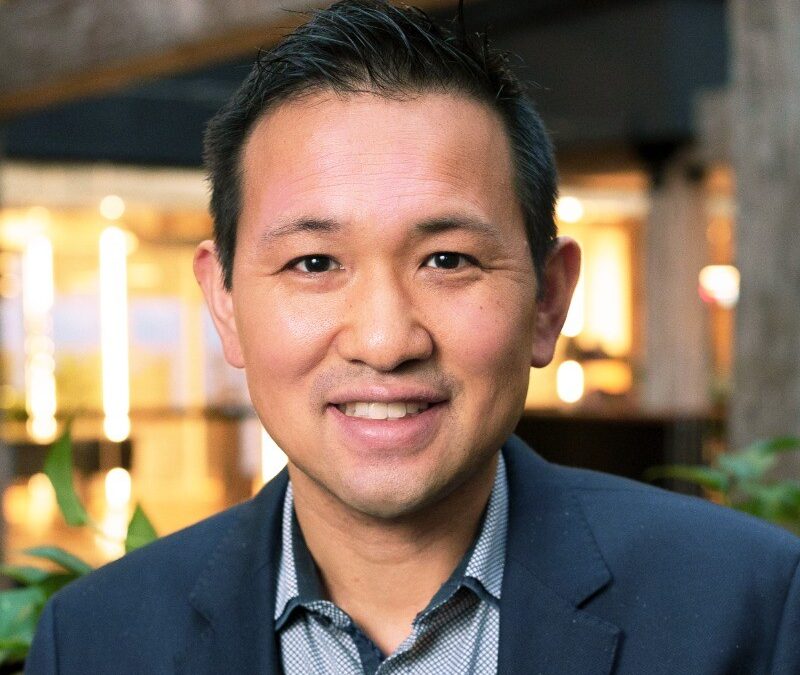
Theory, Practice and Feedback: John Foong’s Formula for Better Leadership
What makes someone a better leader? Is it knowledge? Experience? Intelligence? Seniority? According to John Foong, none of these is sufficient on its own.
Leadership, like almost every other capability, is a skill. And John offers a deceptively simple formula for developing it:
Theory + Practice + Feedback
John returned to The Courage to Lead Interview Series for Episode 098, following his first appearance in Episode 056.
His career has included senior leadership roles with Google, Uber and Domain. He has led international teams, managed complex commercial operations and helped develop other leaders across some of the world’s most recognised organisations.
Yet what makes this conversation so valuable is not the impressive résumé.
It is John’s willingness to speak honestly about what he has learned, what he once got wrong and why no leader can afford to stop improving.
A Season Between Execution and What Comes Next – John Foong
John Foong spent approximately four and a half years at Domain before the company was acquired.
Rather than immediately accepting another senior role, he chose to create space to reflect on what should come next.
He has spent more time with his wife and four young children, supported ageing parents, volunteered, focused on his health and considered the kind of organisation he may eventually want to lead as CEO.
This period has also allowed him to experience something many employees manage every day: the unpredictability of family life.
Children become sick. Parents require support. School holidays arrive. Responsibilities do not remain neatly separated from professional life.
John believes it is increasingly acceptable for people to bring these realities into the workplace rather than pretending they do not exist.
Vulnerability, in his view, is not the enemy of performance. It can be an important ingredient in a high-performing team.
Servant Leadership Began with His Grandmother
When asked about his earliest experience of leadership, John Foong spoke not about a famous executive or business school professor, but about his grandmother.
She helped care for him while his mother worked and modelled a practical form of servant leadership.
She anticipated needs. She provided care. She sacrificed her own time and energy so that the people around her could flourish.
John now sees similar responsibilities in parenthood and leadership.
Servant leadership does not mean removing standards or allowing people to avoid accountability. Parents still provide boundaries, and organisational leaders still establish expectations.
The difference is the purpose for which authority is used.
Authority should create the conditions in which other people can grow.
John Foong – Everyone Who Works for You Is a Volunteer
One of John Foong’s most compelling leadership principles is that every employee should be treated as though they are a volunteer.
People have agency. Talented employees could choose to work for another organisation or another leader.
A position title may give a manager authority, but it does not automatically earn commitment.
John believes a leader’s responsibility is to create an environment where people can say:
This is the best place for me to use my skills.
That does not mean employees are working for the personal benefit of their manager. They are making decisions based on their own career, financial security, development and sense of purpose.
This reverses the traditional command-and-control relationship.
The employee is not simply there to serve the leader. The leader is also there to serve the employee.
Leadership Is Theory, Practice and Feedback – John Foong
John Foong applies the same development formula to leadership that he would apply to cooking, fitness, swimming or any other skill.
Theory
Leaders need knowledge.
They can gain it through books, formal education, podcasts, mentoring, observation and conversations with experienced people.
Theory helps leaders understand what good leadership might look like.
Practice
Knowledge alone is not enough.
A person cannot learn to swim simply by reading a book about swimming. At some point, they must enter the water.
Leadership also requires experience.
People can volunteer, lead a project, accept responsibility, facilitate a meeting or support another team member. Formal authority is not required before someone can begin practising leadership.
Feedback
The third element is what transforms repeated activity into improvement.
Practice without feedback can simply reinforce existing mistakes.
John believes feedback is the secret gift that connects experience back to knowledge and then produces better practice.
That feedback may come from a coach, mentor, colleague, employee survey, trusted adviser or deliberate personal reflection.
The important point is that someone or something must hold up a mirror.
The Success Trap
John Foonf described one of the most dangerous periods of his leadership development as a time when everything appeared to be going well.
He was working at Google. The organisation was expanding rapidly. His teams were delivering results. His responsibilities, remuneration and opportunities were increasing.
Those external signals suggested that he must be a good leader.
John now calls this the success trap.
Success can prevent leaders from examining what they are not doing well.
John reflected that he sometimes moved or cancelled one-to-one meetings. From his perspective, this seemed reasonable because he was busy.
For the person whose meeting was repeatedly postponed, it communicated something very different.
He also recognised that he was not always thinking deeply enough about what individual employees wanted from their careers.
He cared about his people, but feedback revealed that the care he felt was not always the experience they received.
That is one of the most important lessons in this conversation:
Leadership is not measured by our intentions. It is experienced through our actions.
John Foong – Why Every Leader Needs a Mirror
John Foong has worked with a leadership coach for many years.
The coach does not simply provide encouragement. He challenges John’s interpretation of events, identifies dysfunctional interactions and helps him recognise patterns he may not see himself.
During his current transition, John has also worked with a coach who specialises in executive career changes.
Together, they have examined what John enjoyed about previous positions, what he found difficult, what he would like to learn and what he no longer wants in his next role.
They converted his priorities into structured criteria against which potential opportunities can be assessed.
The process does not make the decision for him.
It prevents an attractive title or organisation from distracting him from what genuinely matters.
Coaching, in this sense, is not remedial. It is part of remaining effective.
As John explains:
A coach is the bridge between practice and theory.
Meaningful Career Conversations Cannot Be Left to Chance
John Foong is deliberate about scheduling career conversations with the people he leads every six to eight weeks.
These are separate from ordinary operational meetings.
The agenda includes:
- Feedback about the employee’s performance.
- Feedback from the employee about John’s leadership.
- Discussion about development and future opportunities.
- What is working well.
- What may need to change.
- What the employee may need to stop doing.
These conversations are important, but they are rarely urgent.
That is precisely why they are frequently postponed.
Operational problems demand immediate attention. Development conversations can always be moved to another day—until six months have passed and the conversation has never occurred.
John recalled a question used within Google:
Have I had a meaningful career conversation with my manager in the last six months?
The question appears simple, but the answer can reveal whether an employee believes their leader knows them, values them and cares about their future.
Leaders should not wait for employees to initiate these conversations.
Power differences can make people reluctant to ask their manager for time. Creating the opportunity is part of the leader’s responsibility.
Creating Leaders Who Become Better Than Us – John Foong
John Foong strongly agrees with the principle that the true measure of a leader is how many other leaders they create.
He takes the idea even further.
The objective should be to develop leaders who become better than the person who developed them—and who then create more leaders themselves.
That requires leaders to adopt the mindset of a coach.
They need to understand:
- The capability the person requires.
- Their present strengths and weaknesses.
- The future they are working towards.
- The experiences that will allow them to practise.
- The feedback that will help them improve.
Leadership development cannot be reduced to an annual appraisal or an occasional training course.
It requires an ongoing relationship.
Using AI Without Surrendering Critical Thinking
John Foong also provides a practical example of how senior leaders can use artificial intelligence to accelerate learning.
When exploring a new sector, he may ask AI to identify useful resources, explain the industry, compare successful and unsuccessful organisations and assess which aspects of his experience may transfer.
He also uses voice conversations while driving, exercising or completing other activities.
For deeper research, John may use several AI platforms to generate detailed reports and then convert the information into an audio discussion that he can listen to while exercising.
However, he is equally clear about the limitations.
AI can provide inaccurate information with great confidence.
John recommends giving the technology explicit instructions:
- Do not invent an answer when uncertain.
- State the level of confidence.
- Be critical rather than complimentary.
- Present the opposing argument.
- Red-team the conclusion.
- Explain why the initial assumption may be wrong.
The lesson is not to surrender judgment to AI.
It is to use AI to expand and challenge our thinking while retaining responsibility for the final decision.
John Foong – A Strong Opinion Loosely Held
John Foong is preparing deliberately for his ambition to become a CEO.
Before attending an executive interview, he develops a tailored plan for what he would do during his first 90 to 100 days.
He describes a plan as:
A strong opinion that is loosely held.
The plan demonstrates that he has completed the research, understands the organisation and recognises potential gaps in his experience.
At the same time, it remains open to feedback.
John believes a new CEO must build confidence with three broad audiences:
- Employees and the leadership team.
- Customers and external stakeholders.
- Investors, owners and the board.
Each audience will form an early judgment.
Employees want competence, visibility, access and evidence that the leader will listen.
Customers want to know that the new leader understands and values their business.
Boards and investors want relationships, credible analysis and signs that the leader is across the organisation’s key measures.
The first months are therefore not simply about announcing a grand strategy.
They are about listening, learning and earning trust.
Agency and Audacity
John Foong concludes the conversation with one word:
Agency.
He defines agency as both a mindset and a practice—the recognition that while individuals cannot control everything, they can control many of the decisions in front of them.
John believes most people underestimate how much agency they possess.
They accept their current position, circumstances or limitations as permanent.
Agency asks a different question:
What decision remains available to me?
John connects agency with audacity.
Audacity is the willingness to pursue a goal despite the possibility that other people may consider it unrealistic.
It is not a guarantee of success, nor does it remove the need for preparation, judgment or responsibility.
It simply rejects the belief that our future has already been decided.
John Foong – The Courage to Keep Learning
The ethos of The Courage to Lead Interview Series is,
” Leading is not easy. If we never stop learning, build a formidable team that empowers others to create supportive and inclusive workplaces amazing things will happen.”
Allan Sicard
John Foong’s approach to leadership is refreshingly straightforward.
Treat people as though they have choices—because they do.
Create an environment where they can use their abilities and build their future.
Learn the theory.
Practise the skill.
Seek honest feedback.
Protect time for meaningful career conversations.
Use technology to accelerate learning without abandoning critical judgment.
Develop leaders who may eventually become better than you.
And never underestimate your own capacity to make a different decision.
Leadership is not easy.
But when leaders never stop learning, listen to feedback and create the conditions in which other people can flourish, amazing things can happen.
Relationships – Because leadership begins with people.
Reputation – Because trust is earned every day.
Resilience – Because the future belongs to those prepared for change.
#TheCourageToLead #Leadership #JohnFoong #LeadershipDevelopment #ServantLeadership #ExecutiveCoaching #FeedbackCulture #DevelopingLeaders #CareerDevelopment #ArtificialIntelligence #Agency #NeverStopLearning