
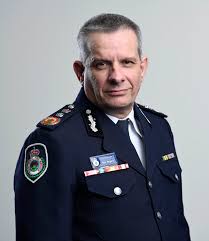
In this episode of The Courage to Lead Interview Series, leadership is often forged in pressure—but rarely at the scale experienced by Rob Rogers.
After 45 years with the NSW Rural Fire Service, including leading through the devastating 2019–2020 bushfires, Rob’s story is one of resilience, humility, and evolution. And now, in retirement, he’s learning to fly—literally.
But beneath the fascinating stories of motorcycles and planes lies something far more powerful: a masterclass in leadership under pressure.
🔥 Leadership in the Firestorm
The 2019–2020 bushfire season was, in Rob Rogers’ words, “a fire season on steroids.” It stretched resources, tested systems, and challenged even the most experienced leaders.
His response wasn’t to defend the status quo—it was to transform it.
- Introduced AI-supported decision-making
- Overhauled dispatch and communication systems
- Led multiple large-scale transformation projects simultaneously
His mindset was simple:
“We did a good job—but we have to do it better.”
That mindset separates good leaders from great ones.
🧭 Rob Rogers – The Reality of Leadership: It’s Never Black and White
One of Rob Rpgers’ most powerful insights is this:
“Leadership is never black and white—there’s always a shade of grey.”
Whether managing life-and-death decisions in bushfires or navigating COVID policy across 70,000 volunteers, he emphasised:
- Context matters
- People are motivated differently
- One-size-fits-all leadership doesn’t work
This is leadership at its most human.
🤝 Trust, Empathy and Listening
Rob Rogers’ ability to lead such a vast and diverse organisation came down to one critical skill: understanding people.
From farmers in rural NSW to urban volunteers, he recognised:
- Different motivations
- Different pressures
- Different perspectives
Rather than forcing uniformity, he built flexibility.
That approach preserved capability, trust, and cohesion—especially during divisive moments like COVID.
⚖️ Courage vs Compassion: The Leadership Balancing Act
One of the most compelling moments in the interview was Rob Rogers’ reflection on COVID decision-making.
While many organisations took rigid approaches, he chose a more nuanced path—balancing:
- Public health requirements
- Organisational effectiveness
- Volunteer retention
It wasn’t perfect. But it was thoughtful, deliberate, and grounded in leadership maturity.
“Leadership isn’t about perfect solutions—it’s about the best option available.”
🧠 The Evolution of a Leader
Perhaps the most valuable insight is how Rob Rogers changed over time.
As Deputy Commissioner, he was:
- Direct
- Operational
- Decisive
As Commissioner, he had to become:
- Strategic
- Reflective
- Empowering
And that transition didn’t happen overnight.
“It took me about 12 months to learn how to be the head of the organisation.”
That honesty is rare—and incredibly powerful.
✈️ Rob Rogers – Life After Leadership
Now in retirement, Rob Rogers is embracing a new challenge—learning to fly.
It’s symbolic.
A leader who once commanded massive operations is now a beginner again.
“You can have experience in one area—but when you start something new, you start at the beginning again.”
That humility may be his greatest leadership trait of all.
🧩 Final Reflection
Rob Rogers reminds us that leadership isn’t about control.
It’s about:
- Trust
- Adaptability
- Learning
- And knowing when to step back
In a world that often demands certainty, his message is clear:
“Do the best you can with what you know—and keep learning.”