How Deborah Wallace APM, Belinda Hughes and two young constables demonstrated that great leaders don’t have all the answers.
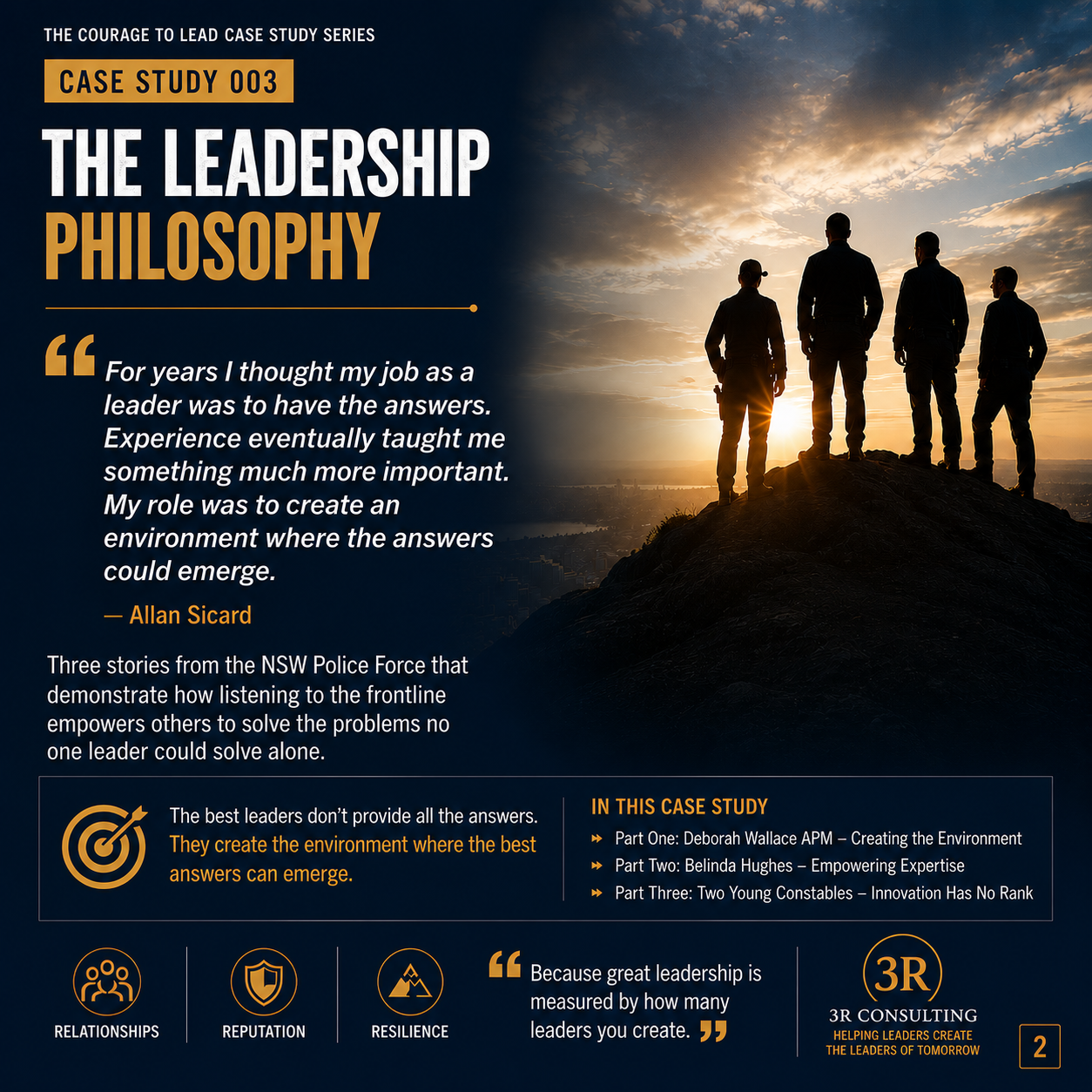
For years I thought my job as a leader was to have the answers. Experience eventually taught me something much more important. My role was to create an environment where the answers could emerge.”
— Allan Sicard
The Challenge
Leadership is often portrayed as having all the answers. The reality is very different. The most effective leaders understand something many organisations overlook. The leaders task is to create the environment where the answers can emerge.
The people closest to the work usually understand the problem better than anyone else. The leader’s responsibility is not to provide every solution. The leader’s responsibility is to create an environment where expertise, experience and innovation can flourish.
During one remarkable period in the NSW Police Force reinforced through 2 guest leaders interviewed on The Courage to Lead Interview Series, I watched this philosophy unfold in three completely different settings.
An organised crime commander. A specialist prosecutor. Two young constables. Different people. Different roles. Different problems.
The same leadership philosophy.
Part One
Deborah Wallace APM —
Creating the environment where the answers could emerge
– Episode 83 The Courage to Lead Interview Series
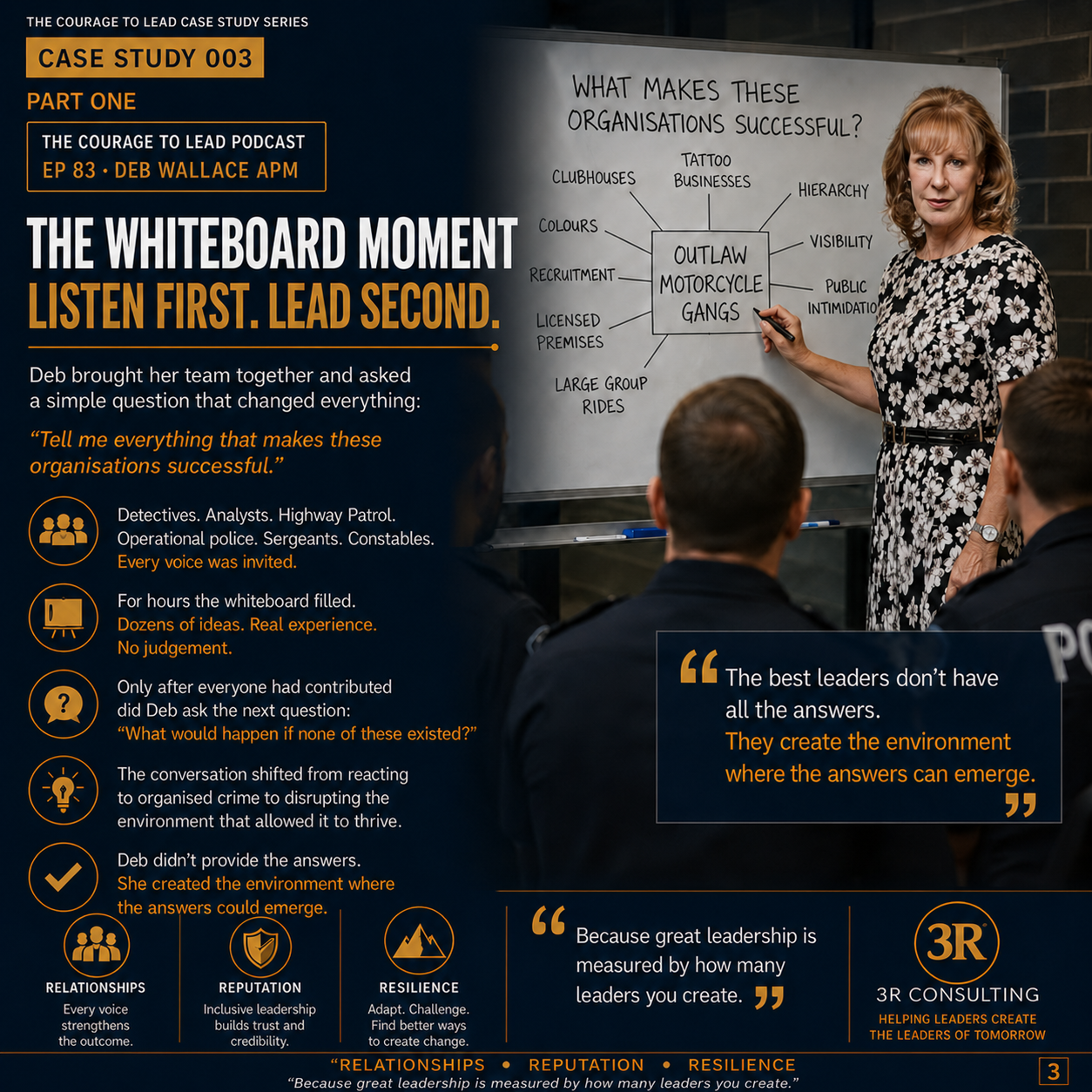
When Deborah Wallace assumed command of the Middle Eastern Organised Crime Squad before later leading the Gangs Squad and Strike Force Raptor, she inherited one of Australia’s most difficult, organised crime problems.
Outlaw motorcycle gangs had become sophisticated organisations. They generated enormous influence through carefully constructed environments.
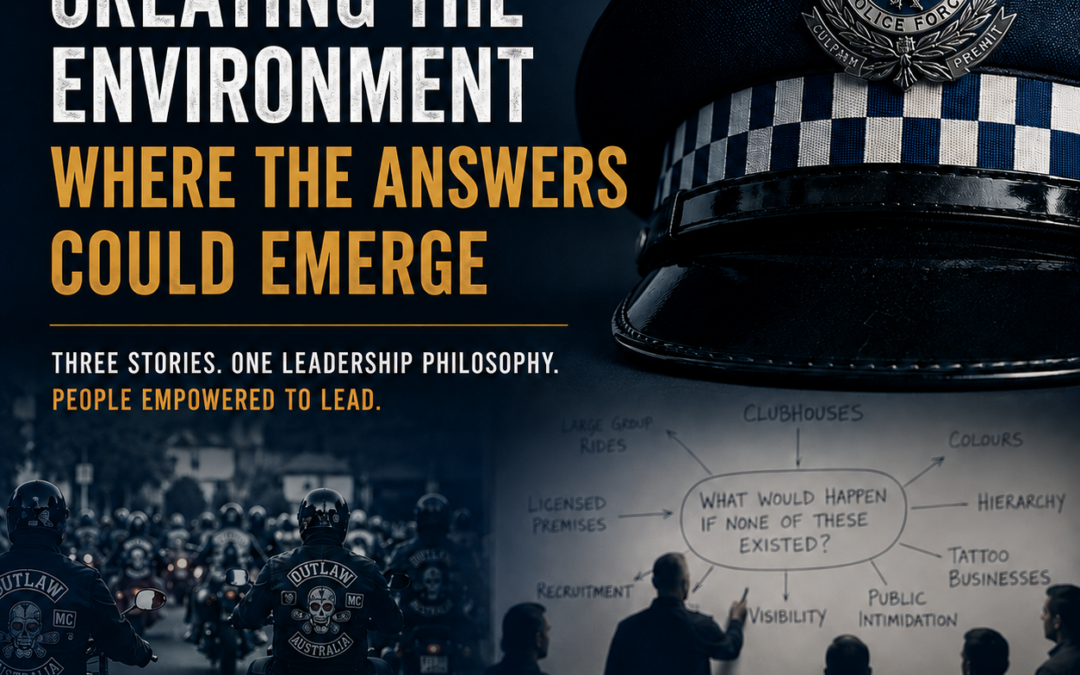
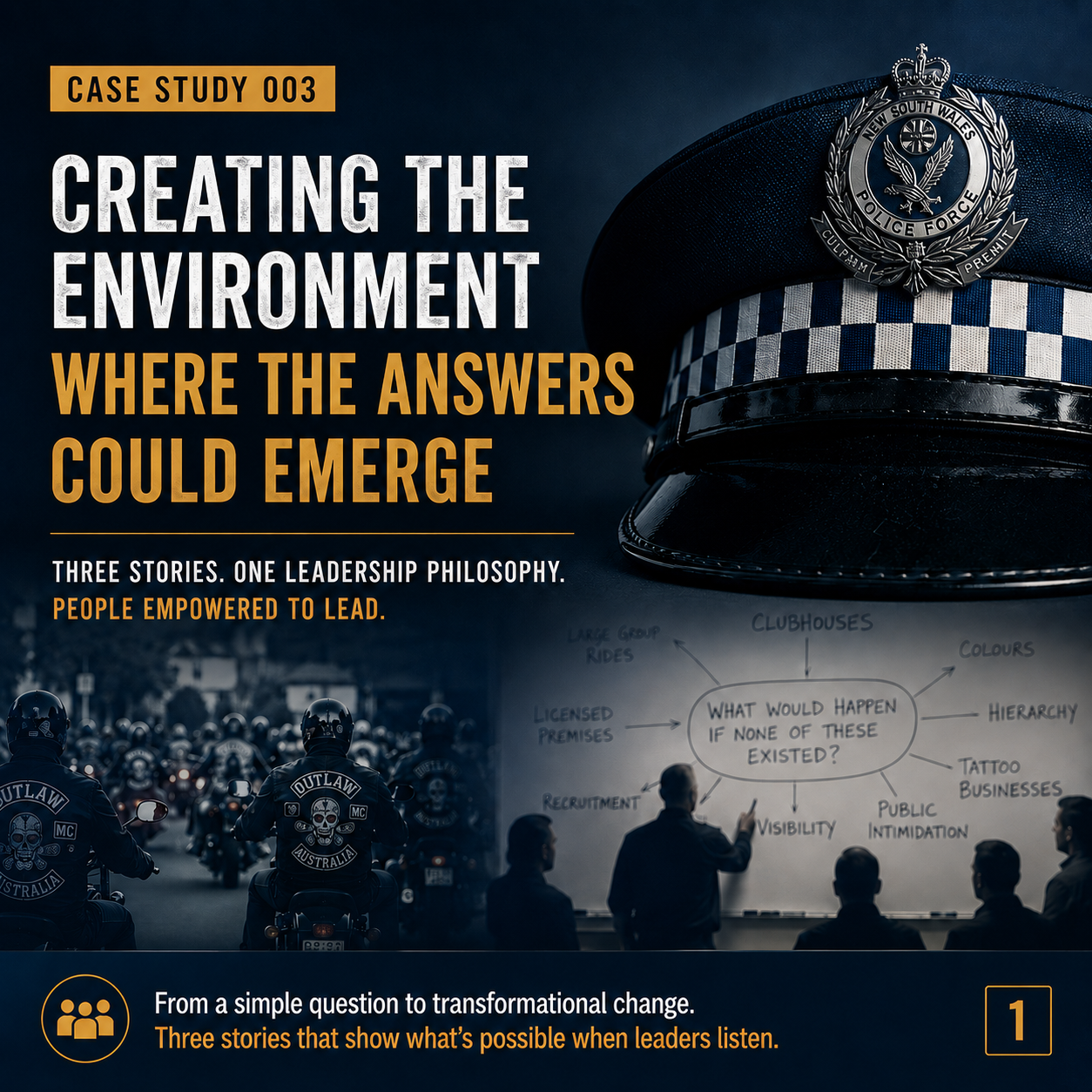
Clubhouses. Colours. Hierarchy. Recruitment. Licensed premises. Tattoo businesses. Large public rides. Visibility. Intimidation.
Most leaders would have arrived with a plan. Deb arrived with a question. She gathered detectives, intelligence analysts, Highway Patrol officers, operational police, sergeants and constables.
Then she asked:
“Tell me everything that makes these organisations successful.”
For hours the whiteboard filled. No criticism. No hierarchy. No ownership. Every discipline contributed. Every voice mattered. Only after everyone had spoken did Deb ask the question that completely reframed the problem.
“What would happen if none of these existed?”
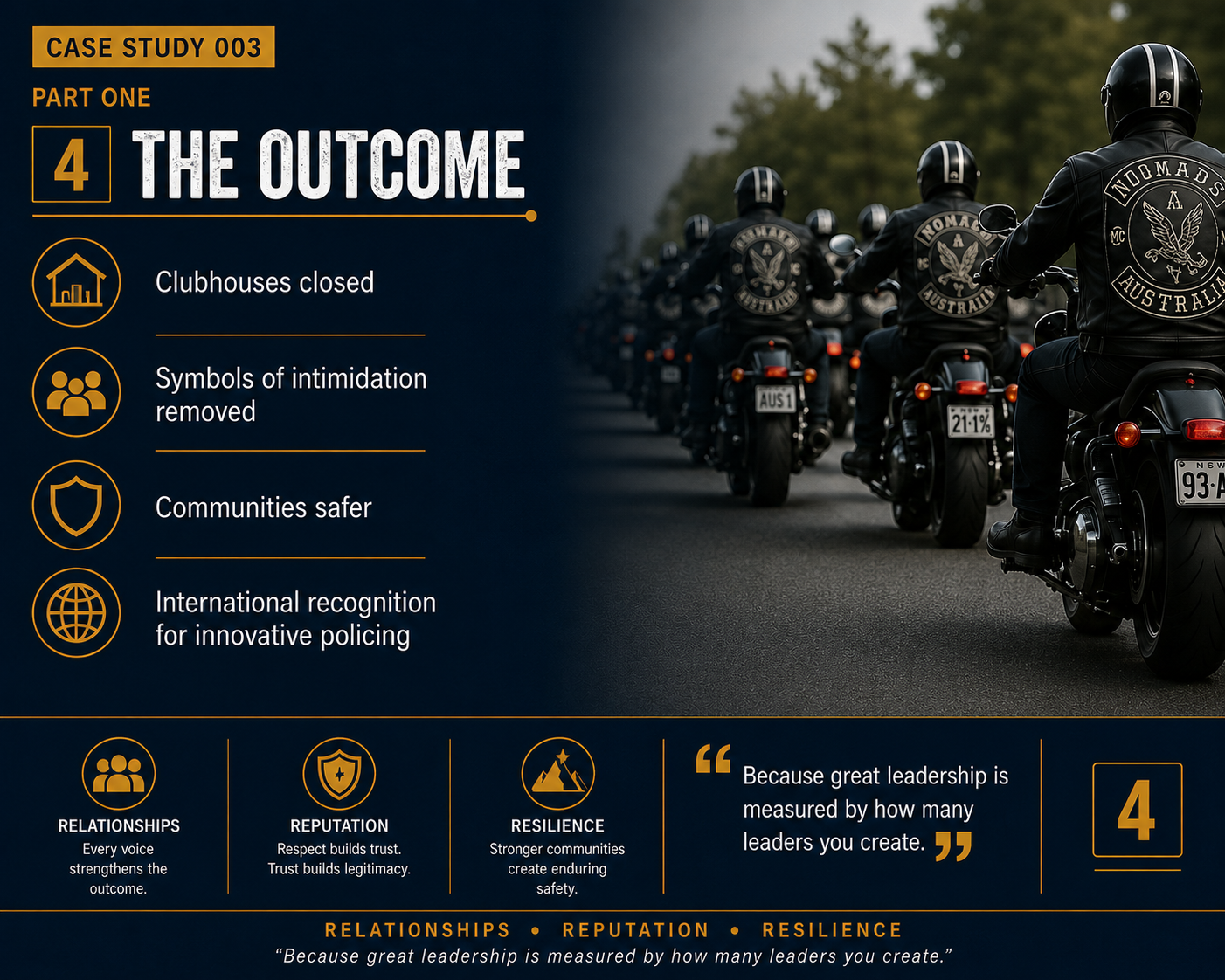
Everything changed. The conversation moved from chasing offenders……to dismantling the environment that allowed organised crime to flourish.
Deb never claimed the idea. She created the conditions that allowed her people to discover it.
Part Two
Belinda Hughes: Turning Innovative Police Work into Legal Power
Creating the environment where the answers could emerge
Episode 74 – The Courage to Lead Interview Series
One of the people empowered to lead under Deb Wallace was Sergeant Belinda Hughes, the operational legal adviser and prosecutor supporting Strike Force Raptor and the Gang Squad.
Belinda’s role was far more than that of a lawyer reviewing decisions after an operation. She worked alongside investigators, provided immediate legal advice during searches and entries, supervised two prosecutors and prosecuted the cases that resulted from Raptor’s operations. When bikies’ lawyers arrived and attempted to challenge or intimidate the operational police, Belinda attended personally and took responsibility for the legal confrontation. This allowed investigators to remain focused on securing premises, locating evidence and completing the operation lawfully.
Her contribution became particularly important during an extended and violent conflict involving the Nomads and the Finks in northern New South Wales. For approximately 18 months, the rival gangs were involved in shootings and other acts of violence with alarming frequency. Traditional investigative and disruption methods were not producing the necessary change.
Under Deb Wallace’s leadership, the command was encouraged to think differently.
Raptor adopted a strategy described as “zero tolerance, 100 per cent compliance.” Police worked with other government agencies and examined every aspect of the gangs’ activities. Vehicle offences, taxation, licensing requirements, building compliance, fire exits and even pool fencing became potential points of intervention. The objective was to create constant lawful pressure and remove the freedom with which the gangs had previously operated.
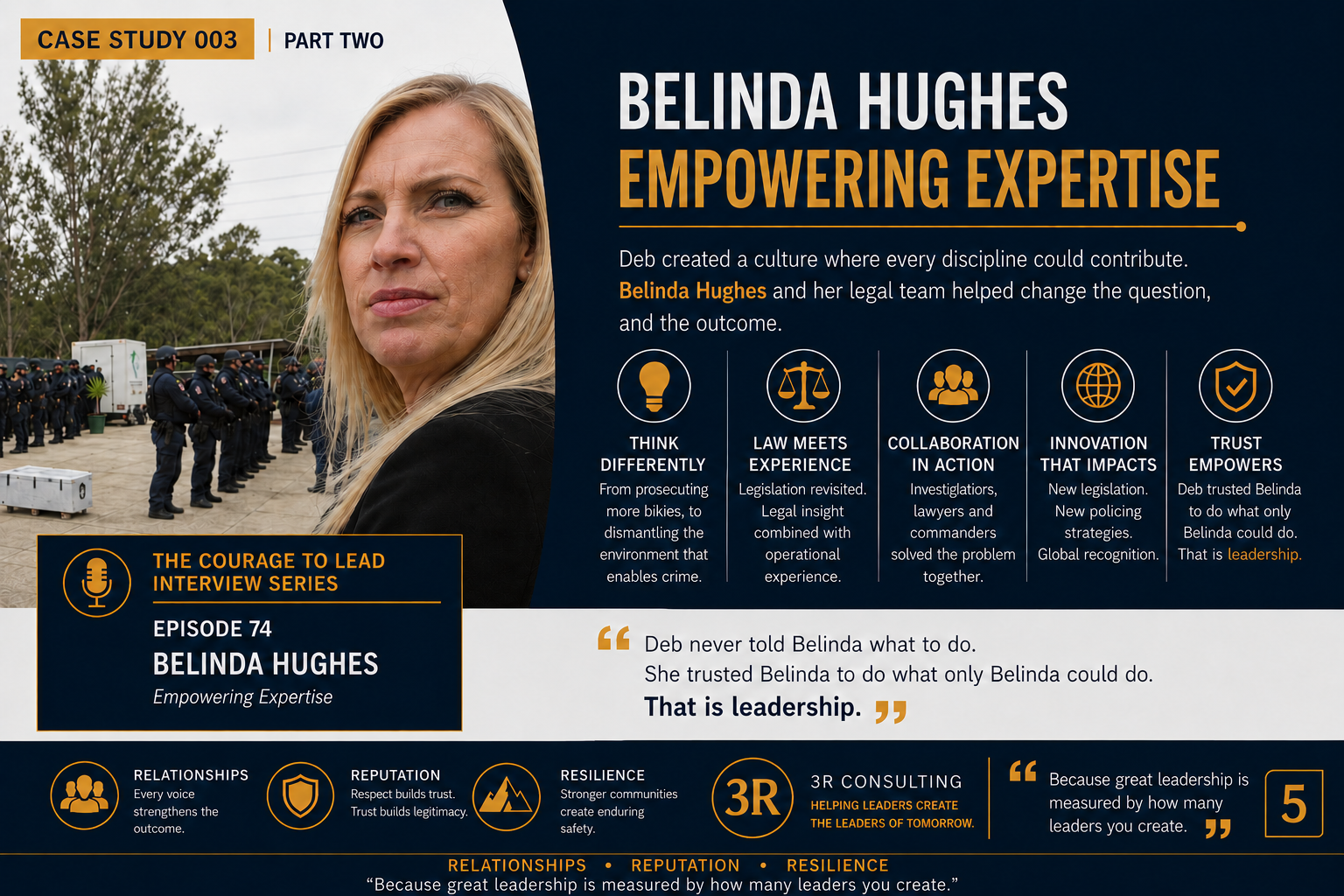
Belinda helped give that strategy its legal force.
One of the team’s most innovative approaches involved using the Restricted Premises Act—older legislation originally designed for premises such as brothels—to target outlaw motorcycle gang clubhouses. Belinda helped develop and support Supreme Court applications seeking to have clubhouses declared restricted premises.
Once a clubhouse was declared, police could enter without notice and without obtaining a new search warrant on every occasion. The clubhouse could no longer function as a private sanctuary, secure meeting place or symbol of control. Police could arrive at any time.
Belinda attended the clubhouses with the operational teams and assisted in preparing the affidavits and legal material needed to support the action. The effect was both operational and reputational. The gangs disliked the constant prospect of police entry, while rival clubs circulated media reports identifying clubhouses that had been declared restricted premises.
Belinda also helped the squad pursue the first Serious Crime Prevention Orders of their kind in Australia. With the support of Deb Wallace and the command, she tested innovative bail conditions and non-association orders that targeted entire criminal networks. Some applications named approximately 120 individuals.
This approach moved policing beyond responding to individual offences after they occurred. It sought to disrupt the associations, communication and organisational structures that allowed the gangs to function.
Belinda’s work was possible because Deb Wallace did not treat innovation as a slogan. She gave trusted people the authority to act. She accepted reasonable risk, supported her inspectors and specialists, and created an environment in which experienced people could test lawful new approaches without being paralysed by the fear of failure.
Deb did not need to personally develop every legal strategy or direct every operation. Her leadership contribution was to recognise people such as Belinda, trust their expertise, remove obstacles and ensure they had the support required to succeed.
Belinda then justified that trust.
She brought together legal knowledge, operational awareness, courage and personal commitment. She was available when the squad needed her, stood beside investigators during difficult operations and transformed innovative ideas into court orders that could withstand legal challenge.
The case demonstrates that empowering leadership does not mean stepping away from responsibility. It means creating the conditions in which talented people can exercise their expertise, challenge accepted practices and produce outcomes that would not have been possible through command and control alone.
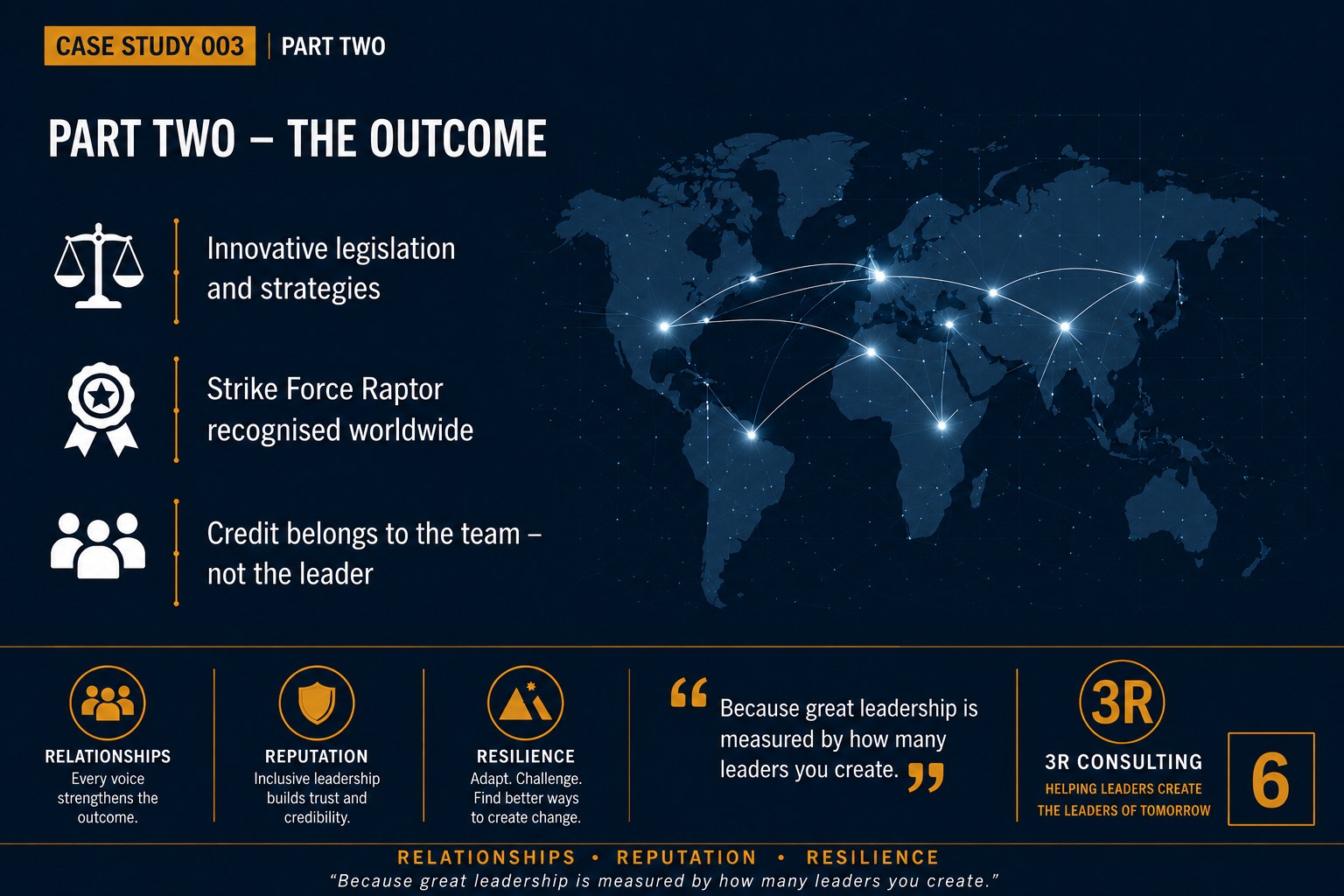
Deb created the environment, but Belinda converted that permission and trust into practical legal innovation that weakened the bikies’ ability to operate.
Part Three
Two Young Constables — Innovation Has No Rank
Creating the environment where the answers could emerge
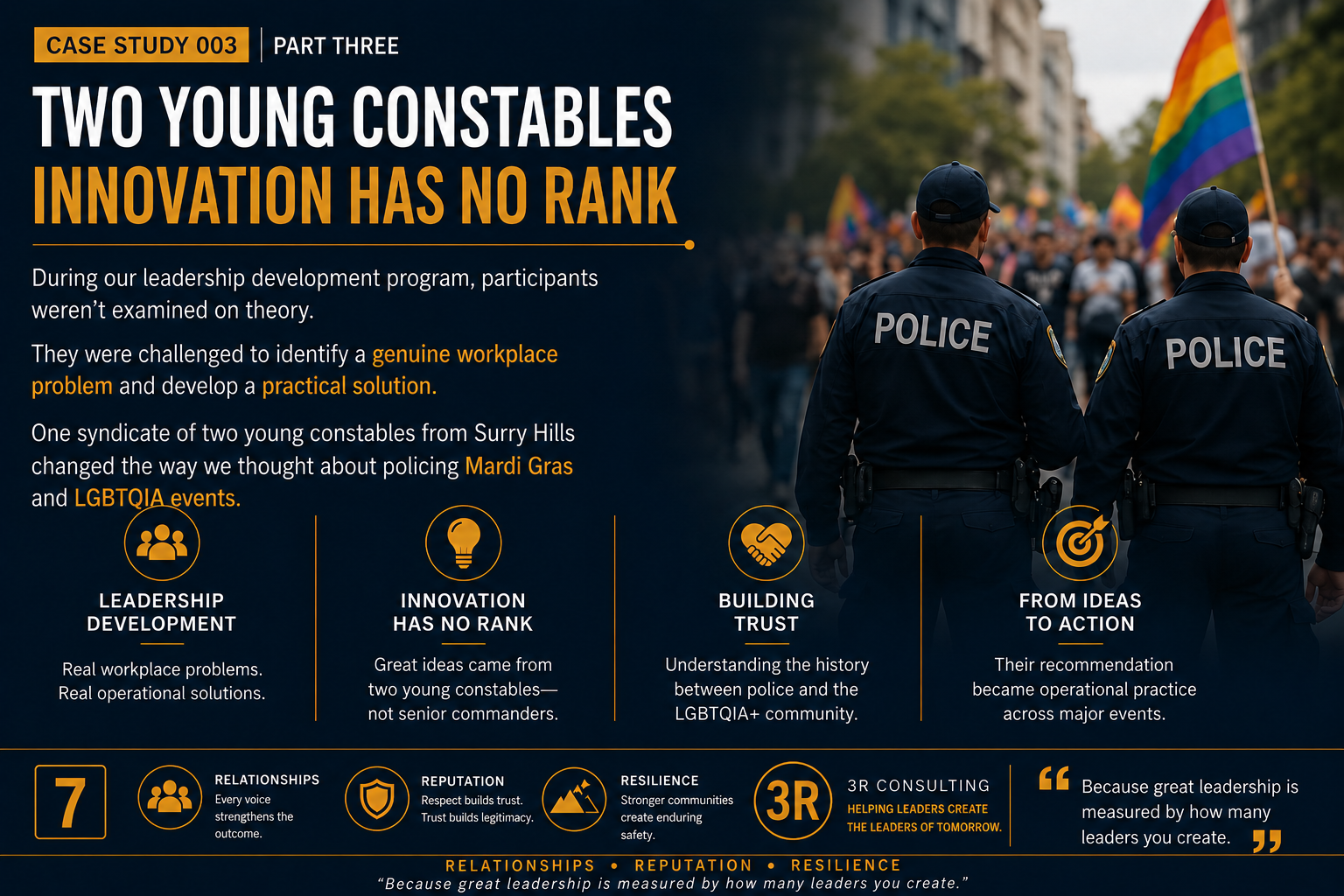
At the same time Deb Wallace and Belinda Hughes were transforming organised crime policing, I was facilitating leadership development programs every year for emerging police leaders along with my normal job as a Police Commander.
Deb Wallace regularly joined those programs as one of our guest presenters. The response was always the same. People wanted to work for her. Not because of her rank. Because they could see the kind of leader she was.
She listened. She trusted people. She believed good ideas could come from anyone. Our final assessment wasn’t an examination.
Each syndicate identified a genuine workplace problem and developed a practical solution that could improve policing. One syndicate, made up of two young constables from Surry Hills, examined the relationship between police and Sydney’s LGBTQIA+ community during Mardi Gras.
The catalyst for this idea was a very public outcry about the arrest tactics used by police at a recent Mardi Gras March 2013, where the public felt the force used by arresting police on a member of the LGBTIQA community was viewed to be police brutality.
These are the links to this incident
The two young constables in the leadership program recognised something many senior leaders had overlooked. Visiting police officers often arrived from across New South Wales with little understanding of the history of Mardi Gras, the relationship between police and the LGBTQIA+ community or why trust remained so important.
Their recommendation was elegantly simple. Before every Mardi Gras deployment, visiting police should receive a short operational induction explaining the history of Mardi Gras, the significance of respectful engagement and the importance of community trust.
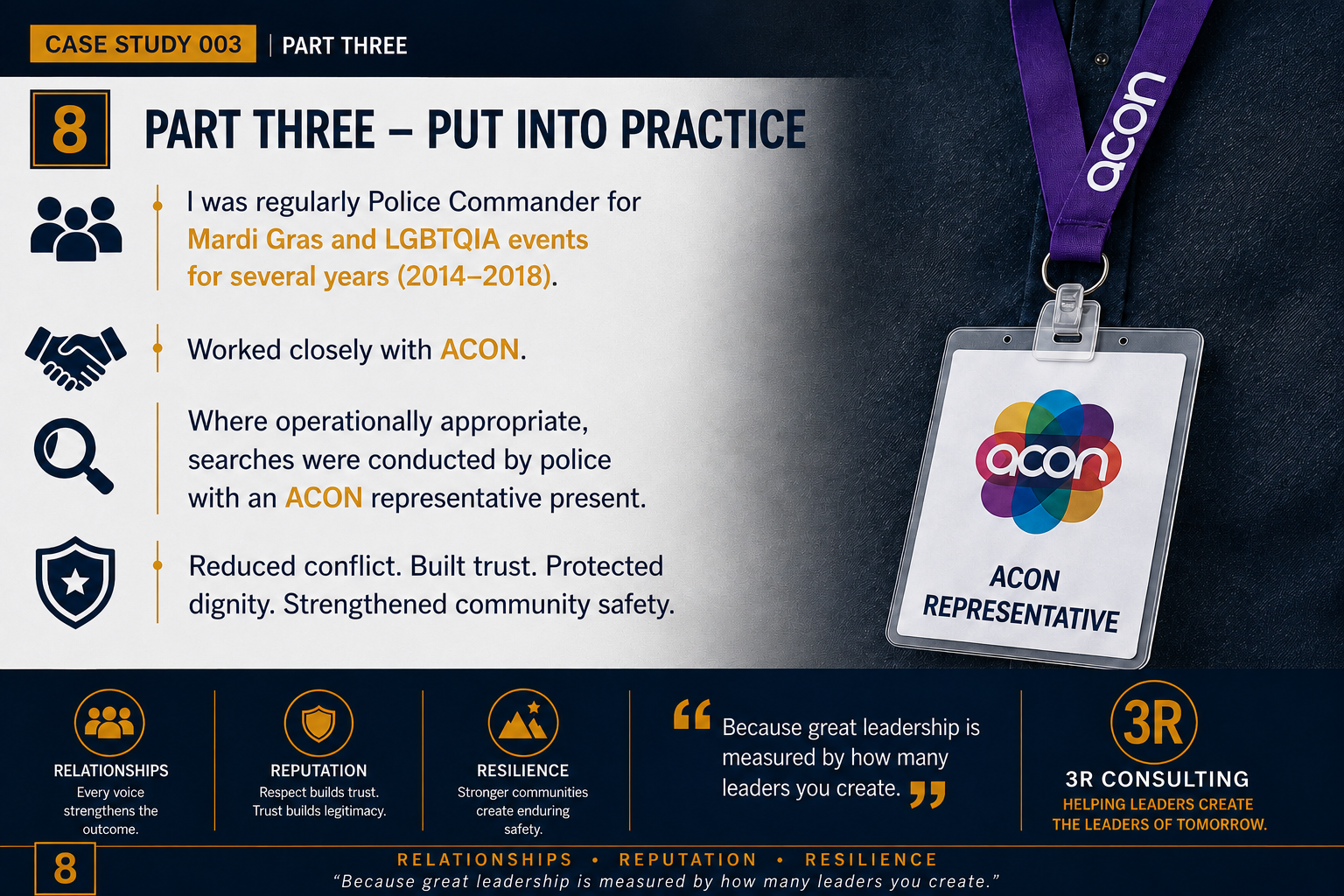
The philosophy immediately became part of our operational planning. We worked closely with ACON. Where operationally appropriate, searches were conducted in the presence of an ACON representative.
The legislation didn’t change. Police professionalism didn’t change. What changed was the environment. Community confidence improved. Conflict reduced. Trust increased.
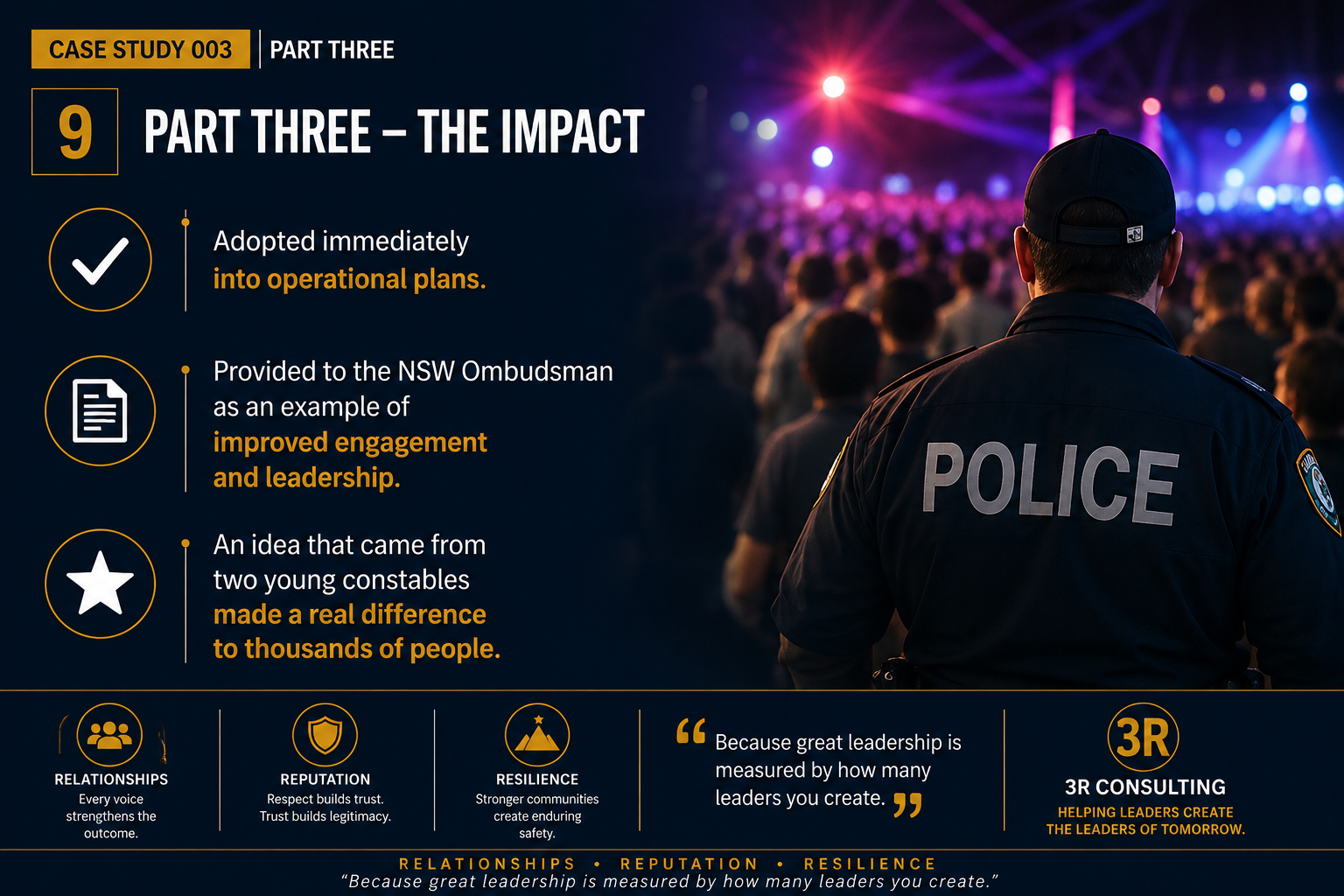
The initiative became recognised as an example of better engagement and was later provided to the NSW Ombudsman as an example of practical leadership through partnership and education.
Most importantly…The idea didn’t come from a Police Commander. It came from two young constables who had been given permission to think differently.
I adopted the recommendation as an operational strategy. At the time I was regularly volunteered to lead our team as the Police Forward Commander for Mardi Gras Events including George Street and Hyde Park on the night of the march.

I also used the same approach when a well-known licensed venue in the Sydney CBD had a major issue with drug overdoses at a LGBTIQA event. I learnt that they did not have a risk management plan for such an event. I shared with that licensee and their security team the innovative approach of these two young police officers. That licensee and their security team formed a relationship with ACON going forward and adopted a Risk Management Plan for any similar events to minimise the risks involved.
Those same two young officers were later recognised as examples of best practice when an innovative leadership program was launched targeting young leaders in the NSW Police at the Police Leadership Centre at Richmond. Their story was highlighted of what is possible when those working in the problem are asked to fix the problem.
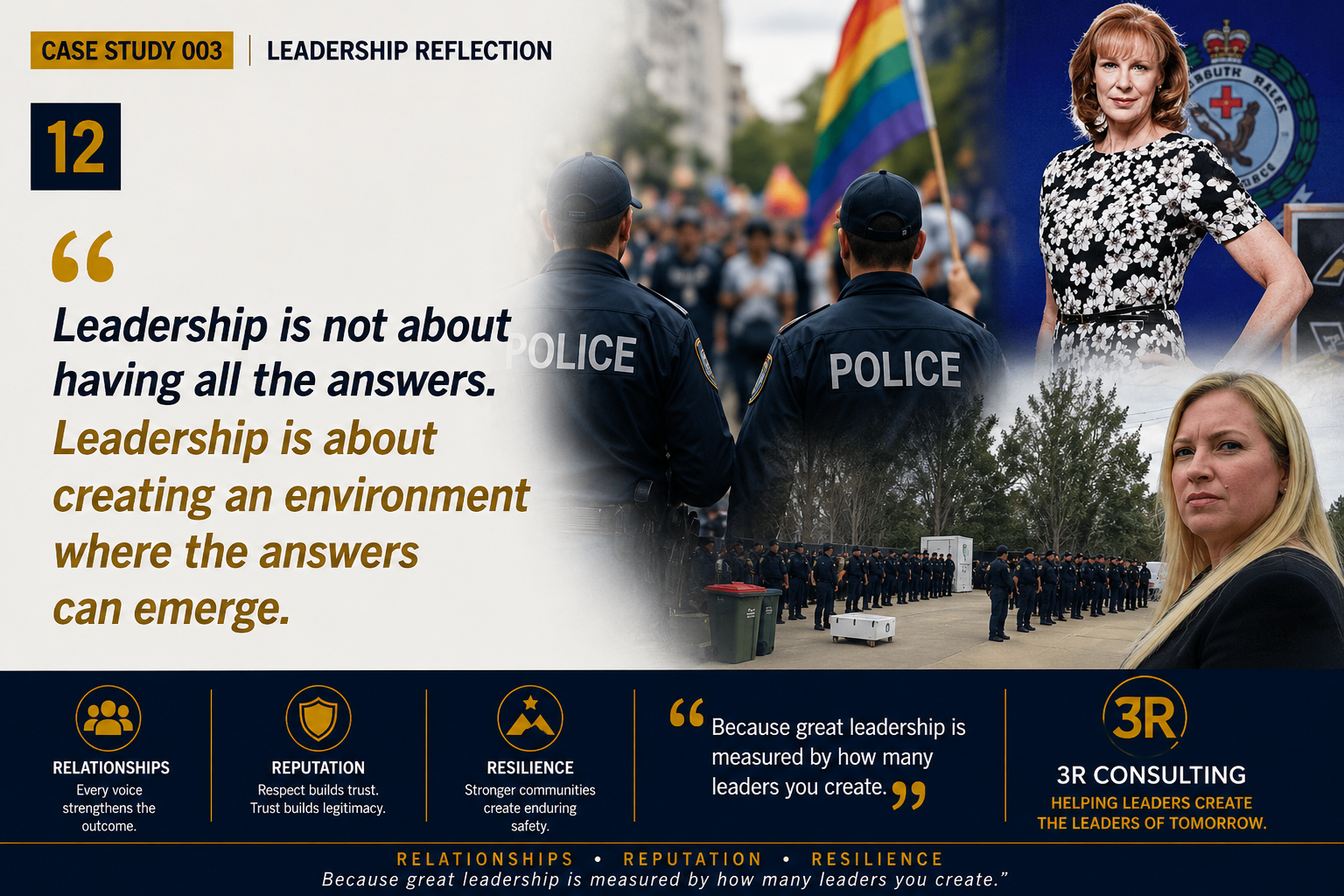
Leadership Reflection –
Creating the environment where the answers could emerge
At first glance these appear to be three unrelated stories. One is organised crime. One is legal strategy. One is community policing.
They are the same story.
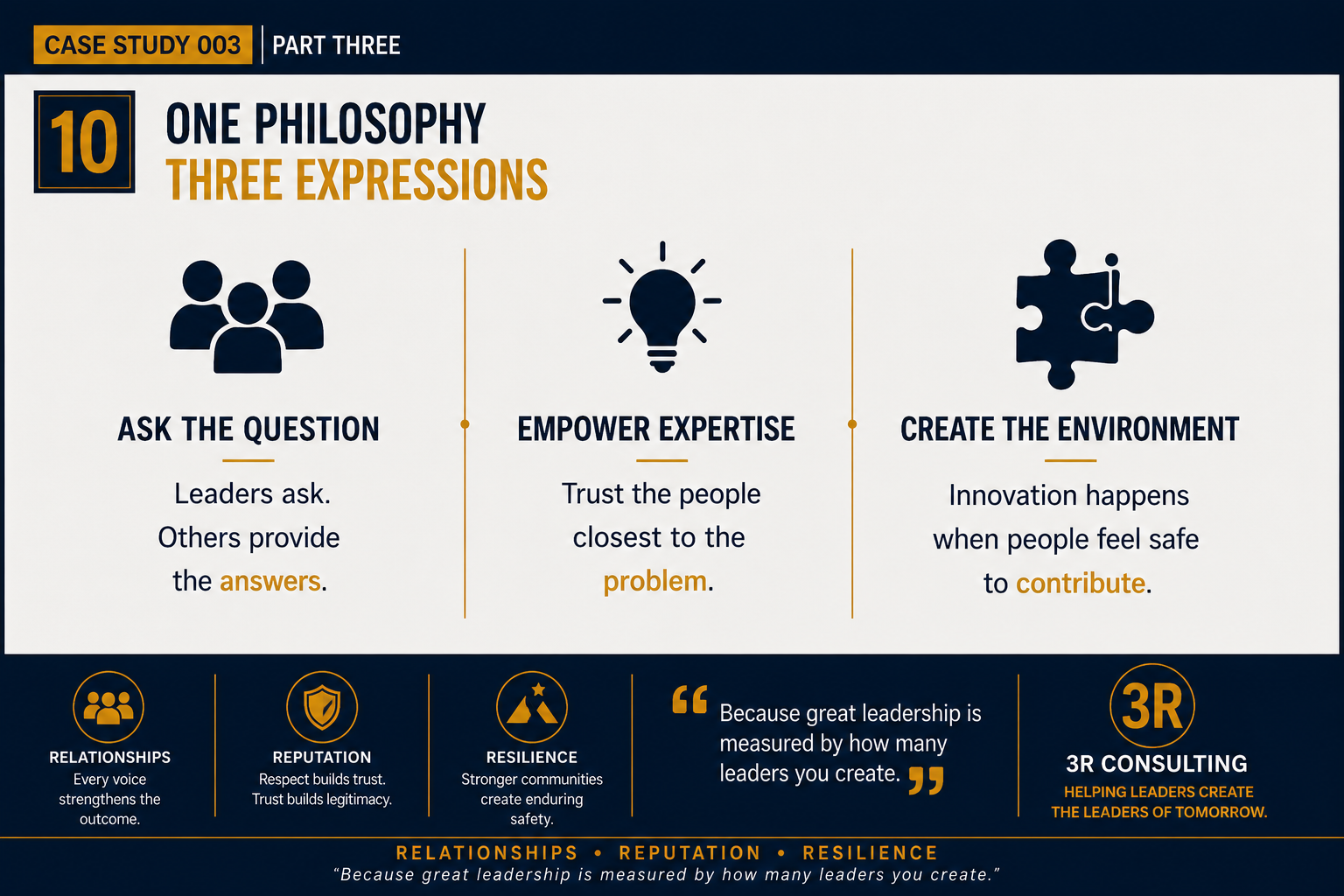
A leader asked questions instead of providing answers. Experts were trusted. Ideas crossed disciplines. Innovation crossed rank. People felt psychologically safe enough to contribute. The result was not simply better policing. It was better leadership.
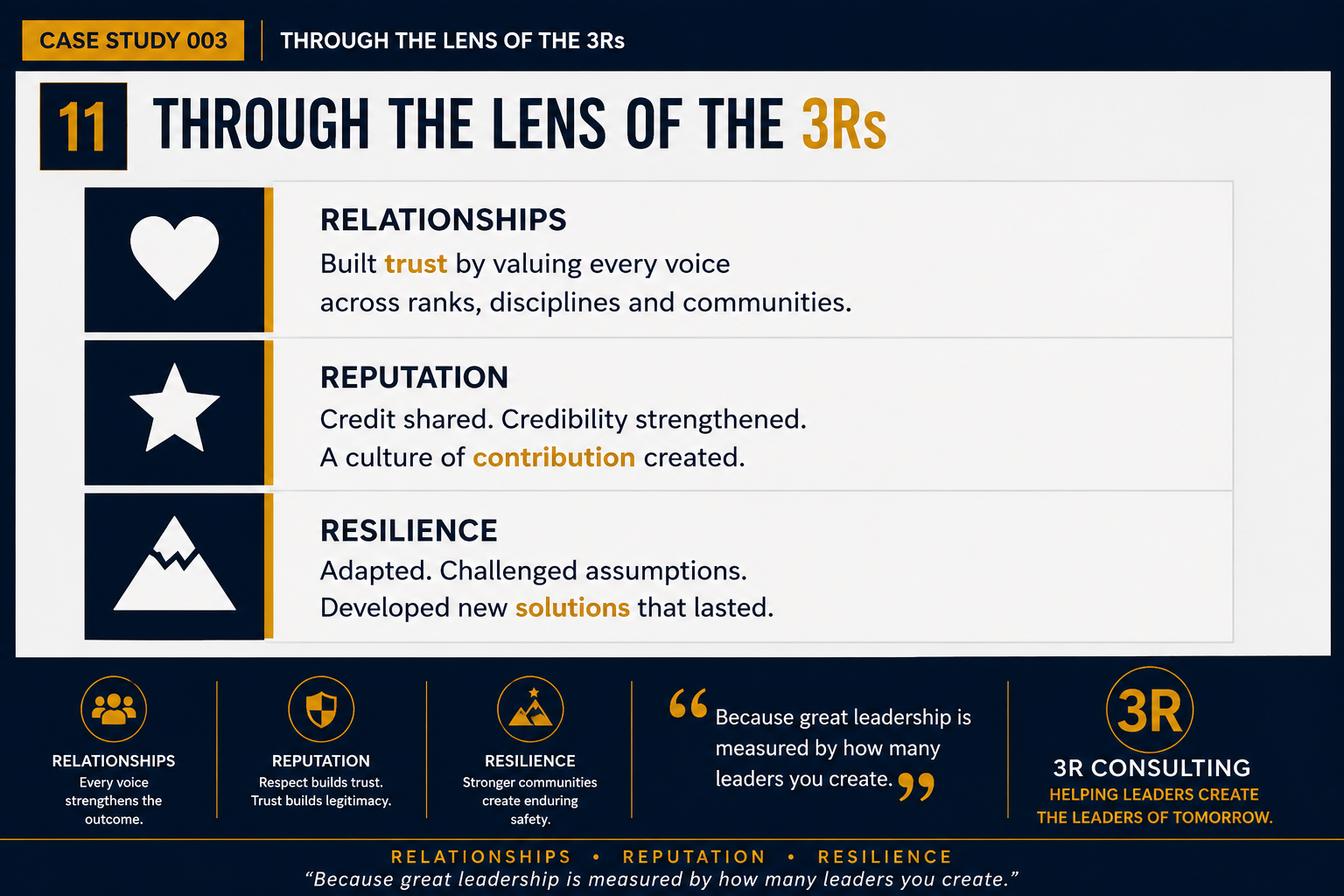
Through the Lens of the 3Rs –
Creating the environment where the answers could emerge
RELATIONSHIPS
Deb Wallace built trust by valuing every voice. Belinda Hughes demonstrated the power of collaboration between operational policing and legal expertise. Two young constables showed that respectful relationships with the community can become part of an operational strategy.
REPUTATION
Each leader strengthened organisational credibility by recognising the expertise of others rather than claiming ownership of success.
RESILIENCE
Instead of relying on traditional approaches, these teams adapted, challenged assumptions and developed innovative solutions that changed the way policing was delivered.
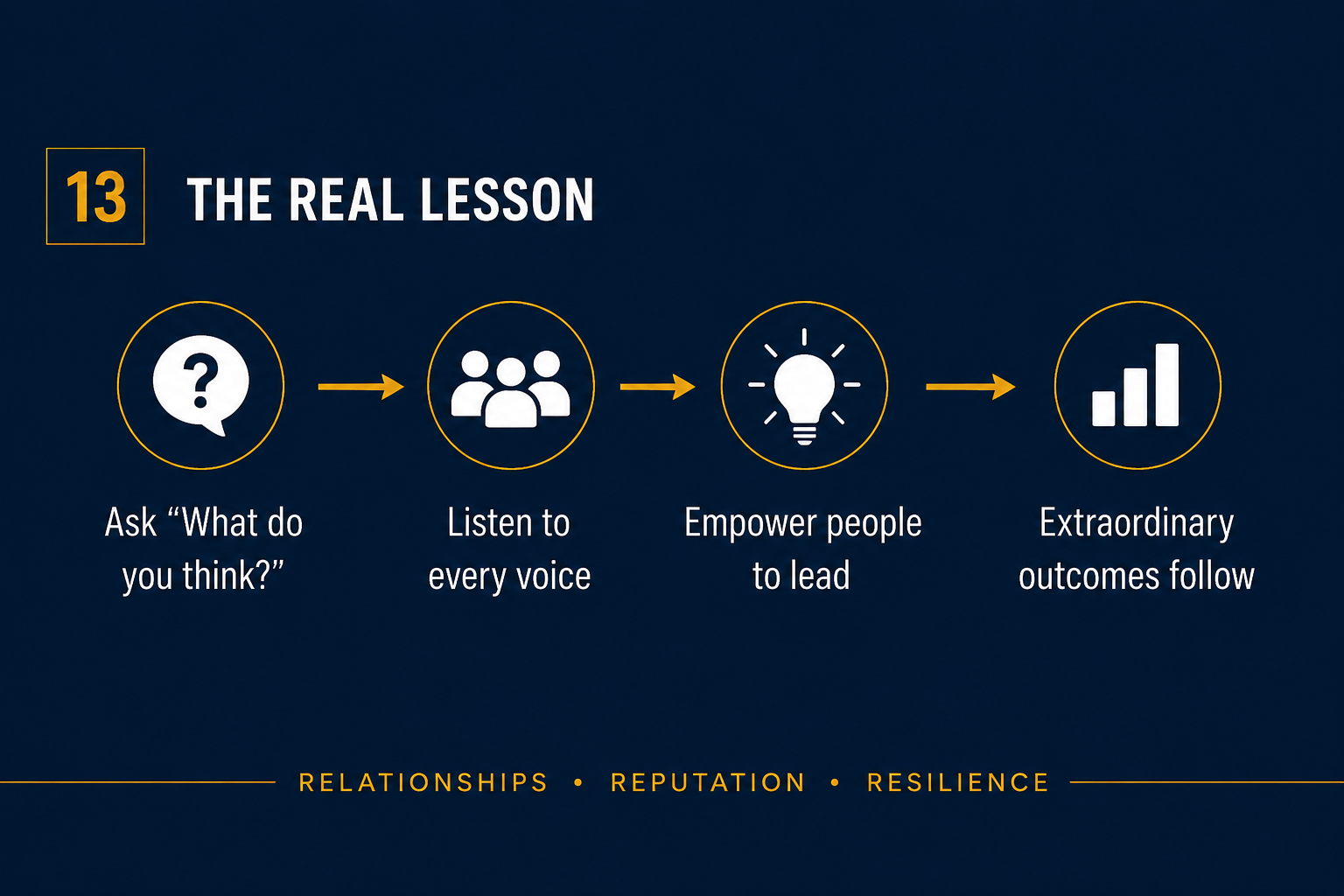
The Real Lesson –
Creating the environment where the answers could emerge
Great leaders ask questions.
They listen. They trust expertise. They create environments where innovation becomes possible.
Leadership is not measured by how many answers you have.
Leadership is measured by how many people feel confident enough to contribute theirs.
A recent guest on
Ep: 92 of The Courage to Lead Interview Series, Mike Wassing, Commissioner of the NSW State Emergency Service
who ended his interview with an inspiring concept of modern leadership.
He empowers his people to meet the challenges of the future by “having a crack.”
As an appetiser, the surprise guest on our 100th Episode has the same approach, they want their people, to see what is coming, predict the environment they will be working in, and “have a crack.”
Modern leaders who are making a difference to their organisations show trust in their people and let them be creative.
Creating an environment of trust and innovation.
Final Reflection –
Creating the environment where the answers could emerge
The common thread through these three stories is not policing.
It is leadership.
Extraordinary outcomes rarely begin with one brilliant leader. They begin when someone has the courage to ask,
“What do you think?”
When leaders create the right environment…people rise, ideas emerge, and communities are better protected.
That’s leadership in action.