
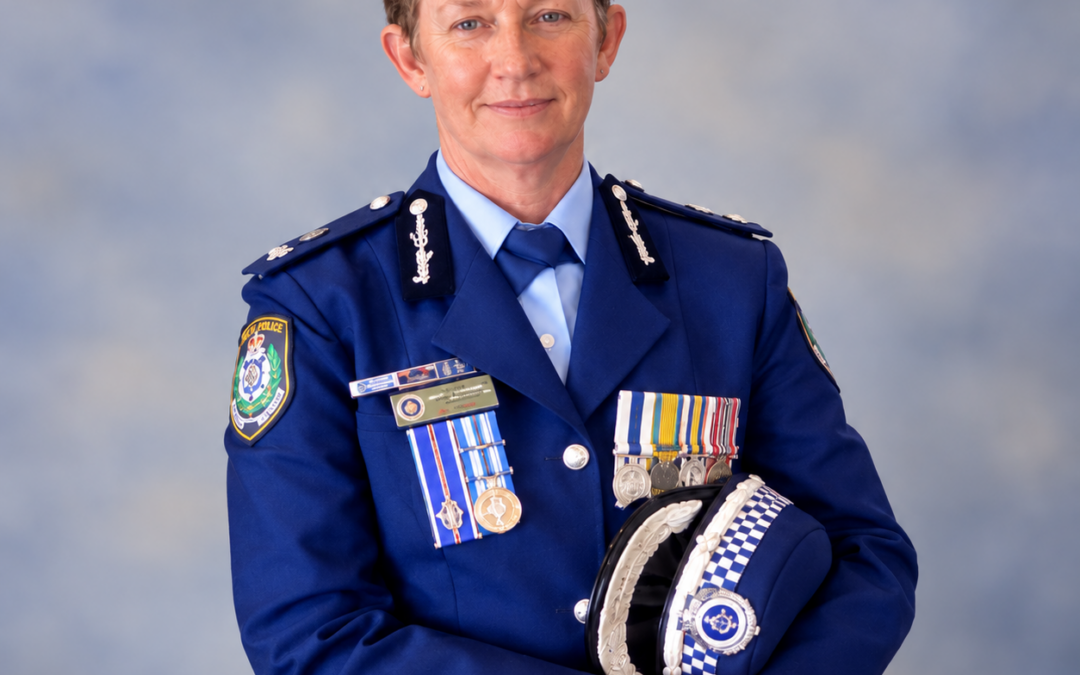
Jodi Radmore on what happens when everything you have learned about leadership over almost 40 years is tested in the most confronting circumstances imaginable?
And then tested again?
Detective Superintendent Jodi Radmore, Commander of Eastern Suburbs Police Area Command, NSW Police Force, has spent a career developing the skills, relationships and judgement that senior leadership demands. Those foundations became critically important when her command found itself at the centre of two extraordinary mass casualty incidents at Bondi. Yet this conversation is not primarily about crisis management. It is about what happens to people. And what good leaders do about it.
Three Leadership Stories Connected by Bondi
This episode follows two particularly significant conversations on The Courage to Lead Interview Series.
In Episode 99, Ambulance Commander Brett Simpson spoke about preparation, trust and leading under extraordinary pressure. In Episode 100, Surf Life Saving NSW CEO Steven Pearce explored service, formidable teams, adversity and the importance of doing the right thing in the right moment.
Now Jodi Radmore provides a third perspective. Police. Three leaders from different organisations. Three different careers. Three perspectives on leadership surrounding events that affected an entire community. And yet remarkably similar themes emerge:
Relationships. Trust. Preparation. Teams. Service. Learning. Care.
Jodi Radmore: Leadership Was Built Long Before the Crisis
One of the great misconceptions about crisis leadership is that somehow extraordinary leaders suddenly discover extraordinary skills when disaster strikes. They don’t. Those capabilities are accumulated over years.
Jodi Radmore’s leadership story begins long before senior command. General duties policing was followed by detective work, child protection investigations, police negotiation, organised crime, operational leadership and ultimately command. Each experience added another layer. Police negotiation taught perhaps one of the simplest leadership lessons in the entire interview: “Negotiating is all about listening.” You do not always need the answer. Sometimes you cannot fix the problem. But you can listen. You can show respect. You can allow another person to be heard.
That principle applies just as powerfully in the workplace as it does during crisis negotiation.
Relationships Before You Need Them
When Jodi Radmore arrived at Eastern Suburbs Police Area Command, building relationships across the community became a priority. Westfield Bondi Junction. Local councils. Emergency services. Surf clubs. Community organisations. Political and community leaders. Jewish community leaders and rabbis.
These were not relationships suddenly established after an emergency occurred. They already existed. Jodi summed it up simply: “Everything was based on relationships.” That distinction matters. A crisis is a terrible time to introduce yourself to the people you suddenly need to trust. Relationships built beforehand create the foundation from which organisations can respond together when something goes terribly wrong.
Jodi Radmore : When Command Becomes Care
Following the Bondi Junction incident, the wider police response quickly mobilised. That allowed Jodi Radmore to focus on two priorities: Her people and Her community. Inspector Amy Scott was one immediate concern. Then came the many police officers who had entered the shopping centre, rendered first aid, helped victims, evacuated people and confronted scenes few people would ever expect to witness.
Some had begun work at 6am. Many would not finish until around midnight. And despite everything they had experienced, some still wanted to return for their next shift. Jodi made the decision for them. They were not coming back. Sometimes leadership means empowering people to make decisions. Sometimes leadership means recognising that exhausted and traumatised people should not have to make another one.
Jodi Radmore and the Leadership of Recovery
The response did not stop at sending people home. Jodi created a dedicated welfare response. People with expertise in injury management and human resources were pulled away from normal duties specifically to support affected police. Officers were contacted. Medical and psychological support was coordinated. Workers compensation processes were navigated.
People were kept connected rather than isolated. Then Jodi noticed something else. Every officer knew the small part of the incident they had experienced. Few understood the entire event. After watching family liaison officers walk victims’ families through the scene, Jodie adapted the idea for police. When officers were ready, they were taken through Bondi Junction and shown how their own actions fitted into the broader response.
It is a powerful example of leadership curiosity. The idea did not need to originate with the commander. A good idea simply needed to be recognised, adapted and used.
Stronger Together
Some officers were deeply affected. Jodi does not pretend otherwise. But her command developed a phrase that captures much of this interview: “We are stronger together.” Police looked after each other. Sergeants watched their teams. Inspectors supported their people.
Mental-health clinicians provided another confidential layer of support. The command maintained contact with officers away from work. And Jodi remained present. That connectedness became even more significant when the command was confronted by another major incident at Bondi Beach.
This time there was experience to draw upon. They had learned. They adjusted what had worked previously. They quickly identified who had been involved, who had been affected, what shifts needed support and what individuals needed time away. Leadership learning had become organisational resilience.
Jodi Radmore: If I Look After Them, They Look After the Community
Perhaps the most powerful leadership philosophy in this episode is also one of the simplest. Jodi Radmore describes the young police, sergeants and inspectors working within her command with obvious pride. Her role, as she sees it, is straightforward: “My job is just making sure that I’m looking after all of them. And if I’m looking after them, they’re looking after the community.”
It turns the traditional leadership hierarchy upside down. The leader supports the people. The people support the community.Leadership becomes an enabling role rather than a controlling one.
What Brett Simpson, Steven Pearce and Jodi Radmore Teach Us
Across three consecutive conversations, three leaders have approached leadership from very different directions. Brett Simpson reminded us that you cannot do it alone. Preparation, trust, honest feedback and psychological safety matter before, during and after crisis. Steven Pearce reminded us that leadership is not about being a superhero. It is about the team, service and doing the right thing in the right moment. Jodi Radmore shows us what happens when the emergency response finishes but the responsibility of leadership continues.
Look after your people. Stay connected. Learn. Accept help. Use every resource available. And care enough to act. Different organisations. Different responsibilities. The same fundamental truth: Leadership is about people.
Trust. Authenticity. Kindness.
At the end of every episode I ask my guest for three words or themes they would recommend to other leaders. After almost four decades of policing, Jodi Radmore didn’t offer a complicated leadership model. She offered something much more useful. Trust your people. Be authentic and honest. And be kind.
Kind to yourself. Kind to your people. Kind to your community.
Perhaps after 101 conversations with leaders from vastly different backgrounds, that simplicity tells us something important.
Leading is not easy. But when we never stop learning, build formidable teams and empower others to create supportive and inclusive workplaces, amazing things can happen. And sometimes the most courageous thing a leader can do is simply show their people: I am here. I trust you. And I care.